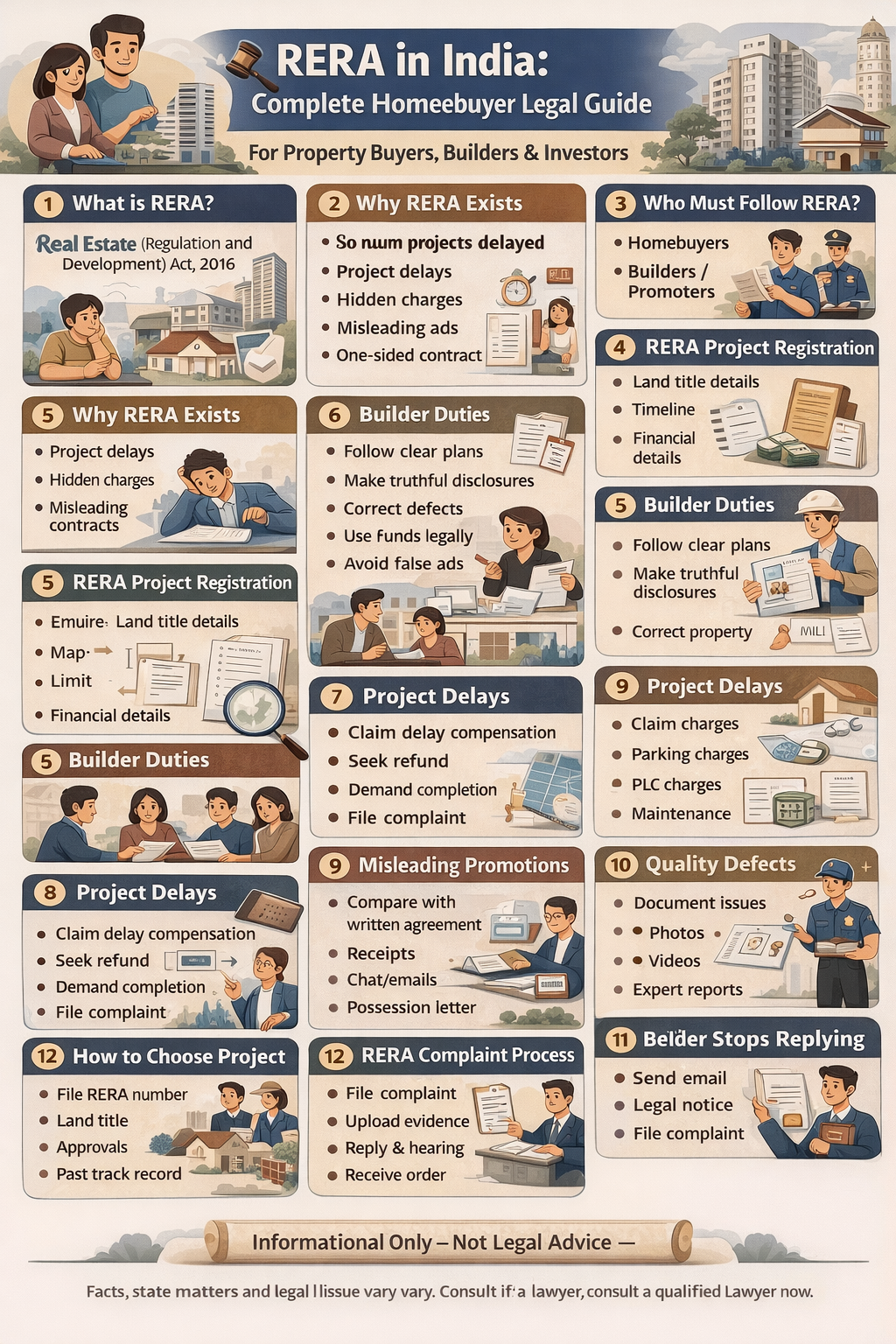
Introduction
Buying a house, flat, shop, or plot is one of the biggest financial decisions in a person’s life. For many families, it represents years of savings, bank loans, emotional planning, and future security. But the real estate sector has historically faced serious problems such as delayed possession, hidden charges, misleading advertisements, poor construction quality, unauthorized changes in layout, and one-sided builder agreements.
To address these long-standing issues, India introduced a landmark law known as the Real Estate (Regulation and Development) Act, 2016, commonly called RERA. This law transformed the rights of homebuyers and created a more transparent and accountable system for the real estate industry.
RERA is not just another technical statute. It is a powerful consumer-protection framework that affects builders, promoters, real estate agents, investors, and ordinary families purchasing homes.
This article explains RERA in a clear, human-friendly, and practical way. Whether someone is buying a first apartment, facing project delay, dealing with false promises, or planning to file a complaint, this guide provides a complete understanding.
1. What Is RERA?
Real Estate (Regulation and Development) Act, 2016 is a central law enacted to regulate the real estate sector and protect buyers.
Its major goals are:
- Increase transparency in property transactions
- Reduce fraud and misleading practices
- Ensure timely completion of projects
- Protect money paid by buyers
- Standardize disclosures by builders
- Create fast dispute-resolution forums
- Improve trust in the housing market
Before RERA, many buyers felt powerless against delays and unfair contracts. The law significantly changed that balance.
2. Why RERA Was Needed
Before regulation became stronger, common complaints included:
- Builder promised possession in 3 years but delayed for 8 years
- Amenities shown in brochure never delivered
- Carpet area unclear
- Extra charges added later
- Project approvals incomplete
- Buyer agreement heavily one-sided
- Refund requests ignored
- Agents made false claims
- Layout changed after bookings
For many middle-class families, such delays caused double burden:
- EMI to bank
- Rent for current residence
RERA was designed to reduce such injustice.
3. Who Is Covered Under RERA?
RERA applies broadly to real estate stakeholders.
A. Homebuyers
People purchasing:
- Flat
- Apartment
- House
- Plot
- Commercial unit (depending on project context)
B. Builders / Promoters
Developers launching projects for sale.
C. Real Estate Agents
Persons or entities facilitating sale/purchase of registered projects.
D. Investors
Individuals purchasing units for investment purposes may also rely on protections depending on facts.
4. What Is a RERA Registration?
Many projects must be registered with the relevant State RERA Authority before advertisement, marketing, booking, or sale.
Registration usually requires disclosure of:
- Land title details
- Approvals
- Layout plans
- Completion timeline
- Project status
- Number of units
- Financial details
- Promoter information
This helps buyers make informed decisions.
5. Why Project Registration Matters
A registered project often allows a buyer to verify key information instead of relying only on sales promises.
That means a buyer can check:
- Is the project officially registered?
- What is the promised possession date?
- Who is the promoter?
- What approvals exist?
- What is the sanctioned plan?
Transparency is one of RERA’s strongest features.
6. Important Buyer Rights Under RERA
1. Right to Information
Buyers are entitled to know material details about the project.
2. Right to Timely Possession
If possession is promised by a particular timeline, unjustified delay may create legal consequences.
3. Right to Refund in Proper Cases
Where project delay or default is serious, refund with interest may be claimed in suitable circumstances.
4. Right to Quality
Construction defects and structural issues may create liability.
5. Right Against Unfair Demands
Hidden charges or arbitrary demands may be challengeable.
6. Right to Fair Agreement
One-sided clauses can be scrutinized.
7. Duties of Builders / Promoters
Builders are not merely sellers—they carry legal obligations.
They are expected to:
- Make truthful disclosures
- Follow sanctioned plans
- Deliver possession lawfully
- Use buyer funds appropriately as required by law
- Correct defects where liable
- Avoid false advertisements
- Execute conveyance documents properly
- Comply with authority directions
8. Role of Real Estate Agents
Agents cannot freely make misleading statements and escape responsibility.
They should:
- Deal in registered projects where required
- Avoid false promises
- Provide accurate information
- Follow regulatory norms
Buyers should never rely only on verbal assurances from agents.
9. Carpet Area vs Super Area
This is one of the most misunderstood issues in real estate.
Carpet Area
Generally refers to usable floor area within the apartment as legally defined.
Super Area / Saleable Concepts
May include common area loading or marketing calculations depending on practice.
RERA helped bring more clarity by emphasizing standardized disclosures.
Always verify what exactly is being sold.
10. Delay in Possession: What Buyers Can Do
Project delay is among the most common disputes.
Possible Buyer Options
Depending on facts:
- Continue in project and claim delay compensation
- Seek refund with interest
- Demand updated completion timeline
- File complaint before authority
- Pursue additional remedies where available
Facts and documents matter greatly.
11. Hidden Charges and Surprise Demands
Sometimes after booking, buyers are asked to pay:
- Club charges
- Parking charges
- PLC charges
- Escalation charges
- Maintenance deposits
- Legal fees
- Infrastructure charges
Not every charge is illegal—but every charge should be lawful, disclosed, and contractually supported.
Ask for written basis.
12. Misleading Advertisements
Brochures may show:
- Swimming pool
- Clubhouse
- Garden
- Premium views
- Smart-home features
- Luxury fittings
If promotional claims are materially false, buyers may have legal grounds for complaint.
Always preserve screenshots, brochures, emails, and advertisements.
13. Poor Construction Quality
Common issues include:
- Water leakage
- Cracks
- Faulty wiring
- Seepage
- Poor finishing
- Lift issues
- Plumbing defects
Document defects with:
- Photos
- Videos
- Expert reports
- Emails sent to builder
- Possession records
Quality complaints can become strong cases when properly documented.
14. Can Builder Change Layout After Booking?
Material changes in sanctioned plans or promised specifications may require legal scrutiny and consent requirements depending on circumstances.
Buyers should immediately object in writing if unexpected changes occur.
Silence can sometimes weaken later claims.
15. How to Check a Project Before Booking
A smart buyer should verify:
- RERA registration number
- Land ownership/title background
- Approvals status
- Loan tie-ups
- Construction progress
- Past track record of builder
- Possession timeline
- Litigation history (if known)
- Exact carpet area
- Total cost breakup
Never book solely because “prices will rise tomorrow.”
16. Documents Every Buyer Should Keep
Create a dedicated folder containing:
- Booking form
- Allotment letter
- Payment receipts
- Builder-buyer agreement
- Emails
- WhatsApp chats
- Demand letters
- Brochures
- Floor plan
- Possession letter
- Inspection photographs
Good records often decide the strength of the case.
17. What If Builder Stops Responding?
Do not rely on endless phone calls.
Use a structured approach:
- Send formal email
- Send legal notice if required
- Preserve delivery proof
- Gather documents
- File complaint before proper forum
Written communication is stronger than verbal arguments.
18. Can Buyer Stop EMI Because of Delay?
This is a sensitive issue.
Bank loan obligations and builder disputes are often separate legal relationships. Stopping EMI without advice may create banking consequences.
Always take legal and financial guidance before defaulting.
19. RERA Complaint Process (General Overview)
Different states have their own authorities and procedures, but generally the process may include:
- Filing complaint
- Uploading documents
- Notice to opposite party
- Reply and hearing
- Orders regarding refund / compliance / relief depending on case
Procedure varies by state.
20. What Relief Can Be Sought?
Depending on facts and jurisdiction, possible relief may include:
- Refund
- Interest
- Delay compensation
- Direction to complete project
- Rectification of defects
- Compliance orders
- Costs in suitable cases
No result is automatic. Evidence matters.
21. RERA vs Consumer Court: Which Is Better?
Many buyers ask this question.
The answer depends on:
- Nature of grievance
- Relief required
- Timeline considerations
- Evidence available
- Strategy of case
- Existing precedents
Sometimes one forum is more suitable than another. Professional advice helps.
22. Can Both Civil and Criminal Issues Arise?
Yes. Some real estate disputes may involve:
- Fraud allegations
- Forged documents
- Diversion of funds
- Cheating allegations
- Breach of contractual obligations
Different remedies may coexist depending on facts.
23. Rights of NRIs and Remote Buyers
Many overseas Indians invest in Indian property and face special difficulties:
- Distance from project site
- Communication barriers
- Documentation delays
- Possession management issues
Maintain digital records and use authorized legal assistance where needed.
24. Joint Buyers and Family Purchases
Where property is booked jointly:
- Check all names in agreement
- Keep contribution records
- Understand succession implications
- Coordinate communication with builder
Internal family clarity prevents future disputes.
25. Builder Insolvency or Financial Distress
If a developer faces severe financial trouble:
- Project timelines may suffer
- Buyers become anxious
- Multiple legal proceedings may arise
Early legal strategy becomes crucial in such cases.
26. Common Mistakes by Buyers
Avoid these errors:
1. Trusting Only Verbal Promises
Always demand written confirmation.
2. Not Reading Agreement
Important clauses are often hidden in lengthy documents.
3. Paying in Cash Without Record
Dangerous and difficult to prove.
4. Ignoring Delays for Years
Act in time.
5. No Document Organization
Scattered papers weaken claims.
27. Practical Case Example
Scenario
Buyer booked flat in 2020. Promised possession: 2023. In 2026 project still incomplete. Builder seeks more money.
Smart Response
- Check agreement timeline
- Gather all receipts
- Capture current site status
- Send written demand for explanation
- Evaluate refund/compensation remedy
- File appropriate complaint
28. Human Side of Property Disputes
Real estate disputes are not just legal files. They affect:
- family planning
- children’s schooling
- savings
- mental peace
- retirement security
That is why timely action matters.
29. Tips Before Signing Builder Agreement
Read carefully:
- Possession clause
- Grace period
- Penalty clause
- Cancellation clause
- Refund timeline
- Force majeure clause
- Maintenance charges
- Parking terms
- Dispute jurisdiction
Never sign in haste.
30. Can Mediation Help?
Yes, in some disputes mediation may save time and cost, especially where builder is willing to settle.
But settlement should always be:
- written
- clear
- enforceable
- realistic
31. Best Strategy If You Already Feel Trapped
If you feel stuck in a delayed or unfair project:
- Stop emotional decision-making
- Organize all documents
- Calculate total payments made
- Identify promised commitments
- Seek legal review
- Choose remedy strategically
Calm action beats panic.
32. Final Conclusion
RERA changed the balance of power in Indian real estate. Buyers are no longer expected to silently tolerate endless delays, hidden charges, and false promises.
At the same time, success depends on awareness, documents, and timely legal action.
A careful buyer checks before booking.
A smart buyer records every payment.
An informed buyer knows when to negotiate—and when to file a case.
If used properly, RERA can be one of the strongest legal tools available to property buyers in India.
Disclaimer
This article is for general educational awareness only and does not constitute legal advice. Real estate disputes depend on facts, agreements, state rules, and evidence. For case-specific guidance, consult a qualified legal professional.